
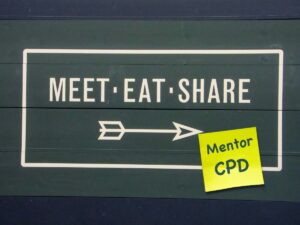
 This autumn, a short series of free mentor CPD. Our guest speakers will take you from a framework for deepening mentoring conversation, via mentoring with Ikigai, to a discussion of mentoring and burn out. So come, meet some interesting people, eat your lunch maybe and definitely share some interesting ideas. It’s going to be an inspiring series of Monday lunchtimes!
Short, free, interactive, lunchtime mentor CPD — Autumn 2025
Reply
 Good questions lead to good listening (and vice versa:
  Being a manager is tough, I’d argue it to be the toughest job in any organisation. You’re expected to deliver the strategy from above while also supporting, motivating, and developing the people in your team. In today’s working world, without core coaching skills, that squeeze can feel relentless.
 The transition of the ‘people function’ title to ‘People and Culture’ represents a fundamental shift in how organisations view their workforce. Linda Grant explores the evolution of this function, now seen as being a strategic partner in achieving organisational goals.
 ‘Listening leads to better performance — in the person who listens, in the person who is listened to and, as a consequence, in the whole organisation’, concludes listening researcher Guy Itzchakov [1]. Plus I would add: it also leads to better change processes and campaigns. So, why has listening training not long since become part of every organisational development project and campaign? Probably because people don’t think they have time for it.
 In an era defined by disruption and complexity, building strong teams has never been more critical. Paula Brennan explores why team coaching is emerging as one of the most powerful investments organisations can make — fostering collective resilience, unlocking innovation, and enabling teams to thrive in turbulent times.
 We’re living in a wild world. Jamais Cascio has named it
  Know-how is crucial and is a major part of the capital of all organisations, including the non-profit sector. It has three main components:
 Elaine, like many, didn’t start her career intending to become a coach. But an early experience working with a coach left her fascinated by its power to transform thinking. “It wasn’t earth-shattering, but it opened my eyes. Someone simply listened to me and gently challenged my thinking in a way I hadn’t experienced before,” Elaine recalls.