

How would you describe the culture in your organisation?
“Open”, “honest”, “trusting”, “appreciative”, “purposeful”, “collaborative”? — I hope so.
“One I can’t wait to leave,” “toxic”, “we all walk on eggshells”, “hostile” — perhaps?
The development of a positive, open and supportive culture was certainly the aspiration of a recent team development workshop I facilitated, and it was perfectly demonstrated through the behaviours, attitudes, values and beliefs of the newly appointed team leader. Continue reading
 Let me share a little history about the coaching and mentoring scene in the past and why our Postgraduate Diploma is so relevant to the organisational world now. As well as being more contemporary and appropriate than many alternative programmes, it focuses particularly on a practical and pertinent agenda to suit current organisational and consultancy needs.
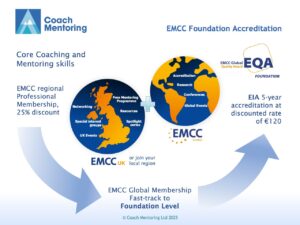 Across nine live, virtual webinars in January 2027, this foundation-level course will give you the fundamental knowledge and skills to be an effective coach and mentor. Plus,
  Creative techniques are transformative in coaching and mentoring. They release blockages, or reveal a deeper awareness. This ready-to-use collection of short poems targets coaching and self-reflection. Each sequence, such as “Even a Day” for burnout prevention or “Gorges de la Nesque” for perspective shifts, includes a poem, its intended use, and coaching questions.
 We are overtly expanding our free Continuing Professional Development (CPD) to target both coaches and mentors. We have many coaches graduating from our
  With your previous studies and practical experience, are you rethinking your coaching identity and realising you need more substance to your coaching repertoire? This Postgraduate Diploma (PGD) will provide a deeper dive into your coaching and mentoring practice, ethics and systemic considerations, and equip you with knowledge in new areas such as team coaching, self-care and self-deception.
 I’ve just been for a long run. A time when I reflect and usually come back with a long list of jobs for the team! Today’s reflection gave me something quite different, a new understanding about hope and such a strong realisation about how it is such a powerful catalyst, facilitator and change agent in many coaching and mentoring conversations.
  In our overstimulated world, characterised, amongst other things, by hate speech on social media and by uncontrolled egomaniacs, the widespread inability to regulate one’s own emotions is becoming increasingly apparent. A stimulus is immediately followed by a reaction, without the ability (or willingness) to restrain oneself. Much suffering and harm occur because no precautions are taken against triggers and emotions are not managed consciously. Yet emotional regulation can be learnt both individually and organisationally.
 Apprenticeships work best when apprentices are supported by mentors who can guide, encourage, and challenge them well. Yet many workplace mentors are promoted into the role with little preparation, even though they are expected to have regular developmental conversations, give constructive feedback, and help apprentices build confidence. That is where coaching and mentoring skills can make a real difference.