
 Happy New Year, we hope that 2022 is healthy and fulfilling for you all! Every year Coach Mentoring Ltd. briefs many hundreds of mentors and mentees in how to get the best out of their mentoring relationships. Join Lis Merrick for some free bite-size sessions to help you optimise your own mentoring skills and knowledge. It’s a great way to sample a taste of what we might offer your organisation’s mentors and mentees! Continue reading
Free webinars — How to have more effective mentoring relationships
Reply
 What is the point in mentoring training and what should you cover? Can you not just ‘lump’ the mentors in with your coaches, or dispense with the training, as “everyone understands mentoring”?
 Being a mentor during the Covid-19 Pandemic is different. Everything we do currently is different. From working remotely for many, to how we socialise and shop. Most people, both at work and home, are experiencing a far greater level of stress than normal. Mentees can adopt a different practical emphasis, both to maximise the impact of their learning and to support them to
  In the first of our series of blogs for
 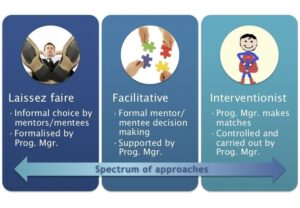 There are a number of factors to consider when matching mentors and mentees in a programme. Matching can get complicated at times when stakeholders in the scheme have very clear views of who the mentoring pairs should be. Matching criteria need to be in alignment with the purpose/business objective for the programme. If a senior leader wants to choose their own protégée to mentor, you may need to be tough and reinforce your matching criteria. So make sure you are clear what they are!
  The most comprehensive literature review of the benefits of mentoring that I have ever read was by
  The more self-aware a mentor can be about their behaviour and the degree to which they listen to their mentees around what the mentee is looking for from them, the better the relationship can be.
 We are delighted to invite you to join Lis Merrick for three free webinars on some state of the art mentoring topics this winter. Whether you are interested in introducing a quick, effective mentoring intervention, like Flash Mentoring or supporting your mentors in their CPD to stop them making mistakes, these webinars will be useful for you to join.
  Are you supporting, motivating and creating the most effective mentoring relationships in your programme? Well, if you are like most organisations then you probably start off with great intentions of doing this through the life of your programme and start off with a flourish, but then budget constraints kick in, or other priorities take over and you find six months down the line your mentors haven’t had a check in or support or supervision since the programme launched.
  The way