
 Mentoring is one of the most powerful learning and change interventions our clients use within an organisational setting. Some organisations see it as an activity, which can take place within the line of command; other organisations see it as incompatible with the fundamental openness of the relationship. Similarly, some cultures see the exercise of authority and influence on the part of a protégé as appropriate; others see mentoring as primarily a developmental activity, with the emphasis on empowering and enabling people to do things for themselves. Some people view mentoring as synonymous with coaching, or teaching; others see it as a form of counselling. Certainly others view it as a kind of godfather relationship.

Recent research has shown that mentoring is an effective tool to combat reoffending and support those leaving prison (Hean & Sæbjørnsen, 2023), (Lowther-Payne et al., 2024). In London, organisations such as Spark Inside, Switchback, and Standout are all using mentoring or coaching to help prison leavers turn around their lives. Continue reading
 This spring, join recent graduates of our
 This dynamic interactive virtual programme gives you an EMCC EQA Foundation qualification with just 30 hours of study. Previous graduates appreciated that nine 90-minute webinars, plus practice and assessed reflection, provided a fast-track route to becoming an EMCC EIA accredited coach! Perfect for those starting out in coaching and mentoring, or working in-house as a coach.
 After seven years and 1,500 participants from more than 60 countries, the WWF Mentoring Team felt it was time to take the Global Mentoring Programme to the next level—and introduce a digital mentoring platform. The goal was never to replace the human element that makes our programme special, but to find a way to scale its benefits and make it accessible to a wider audience across the WWF Network without increasing the workload. At the same time, we wanted to stay aligned with rapid technological developments in the digital age.
 Our winter season of short free mentor CPD is here. Our guest speakers will take you deeper into the use of an ikigai mindset, considering how mentoring can impact an organisation, exploring strength-based mentoring, using stories as a mentor and providing ongoing support for mentors. Please come and share some interesting ideas. It’s going to be an inspiring series of lunchtimes!
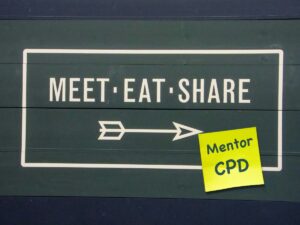 This autumn, a short series of free mentor CPD. Our guest speakers will take you from a framework for deepening mentoring conversation, via mentoring with Ikigai, to a discussion of mentoring and burn out. So come, meet some interesting people, eat your lunch maybe and definitely share some interesting ideas. It’s going to be an inspiring series of Monday lunchtimes!
 Being a manager is tough, I’d argue it to be the toughest job in any organisation. You’re expected to deliver the strategy from above while also supporting, motivating, and developing the people in your team. In today’s working world, without core coaching skills, that squeeze can feel relentless.
 ‘Listening leads to better performance — in the person who listens, in the person who is listened to and, as a consequence, in the whole organisation’, concludes listening researcher Guy Itzchakov [1]. Plus I would add: it also leads to better change processes and campaigns. So, why has listening training not long since become part of every organisational development project and campaign? Probably because people don’t think they have time for it.
 Elaine, like many, didn’t start her career intending to become a coach. But an early experience working with a coach left her fascinated by its power to transform thinking. “It wasn’t earth-shattering, but it opened my eyes. Someone simply listened to me and gently challenged my thinking in a way I hadn’t experienced before,” Elaine recalls.
